


MAKING THE RIGHT DECISION
In the financial market, everyone has the same goal: to make the right decision at the right time.
But what separates the winning trader from the average trader is not just technical knowledge, but the ability to control emotions and act with mental clarity.
Those who have years of experience in Forex, B3, or Bovespa know one hard truth: most losses do not come from a lack of strategy, but from wrong decisions made under the influence of fear, greed, or euphoria.
Even when information is available, the human brain tends to distort reality under stress.
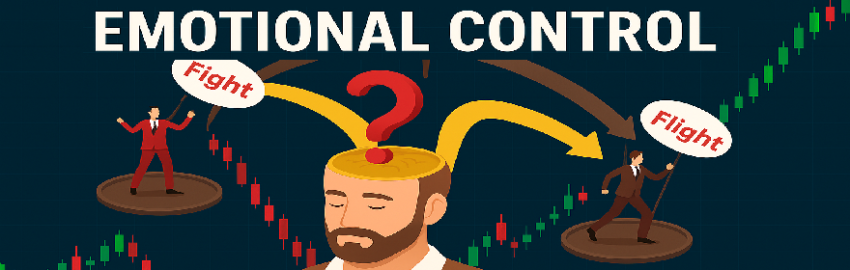
In moments of high volatility, our primitive survival instinct takes over. Without realizing it, we begin to react emotionally to the market instead of acting strategically.
Mastering this “internal enemy” is essential.
The trader who learns to recognize emotional triggers and remain calm in uncertainty can see opportunities where others see chaos.
Making the right decision requires more than technique — it requires self-awareness, discipline, and a mind trained for rationality.
CORRECT BREATHING
Breathing is one of the most powerful — and most neglected — tools in trading.
The way you breathe directly influences how your brain processes information and makes decisions.
Short, rapid breathing activates the sympathetic nervous system, responsible for the fight-or-flight response.
This leads to the release of adrenaline and cortisol, hormones that block logical reasoning and push the trader toward impulsive actions, such as:
-
Closing a trade too early
-
Increasing lot size at the wrong moment
On the other hand, slow and deep breathing activates the parasympathetic nervous system, responsible for calm, focus, and clarity.
Neuroscience studies show that just a few seconds of conscious breathing can:
-
Alter brainwave patterns
-
Restore focus
-
Reduce the emotional impact of losses and gains
Before opening a trade, pause.
Take a deep breath, feel the air fill your lungs, and exhale slowly.
This simple act can be the difference between a hasty decision and a strategic operation.
Breathe. Observe. Decide consciously.
By doing this, you place yourself one step ahead of 90% of traders who still operate on autopilot.
SELF-OBSERVATION
This only reinforces what experienced traders already know:
Never trade while emotionally distressed — for any reason.
It is extremely easy to open a position not to follow a strategy, but to:
-
Compensate for sadness
-
Escape frustration
-
Try to “fix” a social or emotional disappointment
Trading driven by emotion is not trading — it is emotional projection onto the market.
Self-observation is not optional.
It is a core skill for survival and consistency in trading.